15 March 2026 · 7 min read · by Momo · Updated 2 August 2026
Cherry blossom in Tokyo: the complete sakura season guide
When to come, where to stand, what to eat, and how to beat the crowds — sakura season, explained by people who walk it every year.
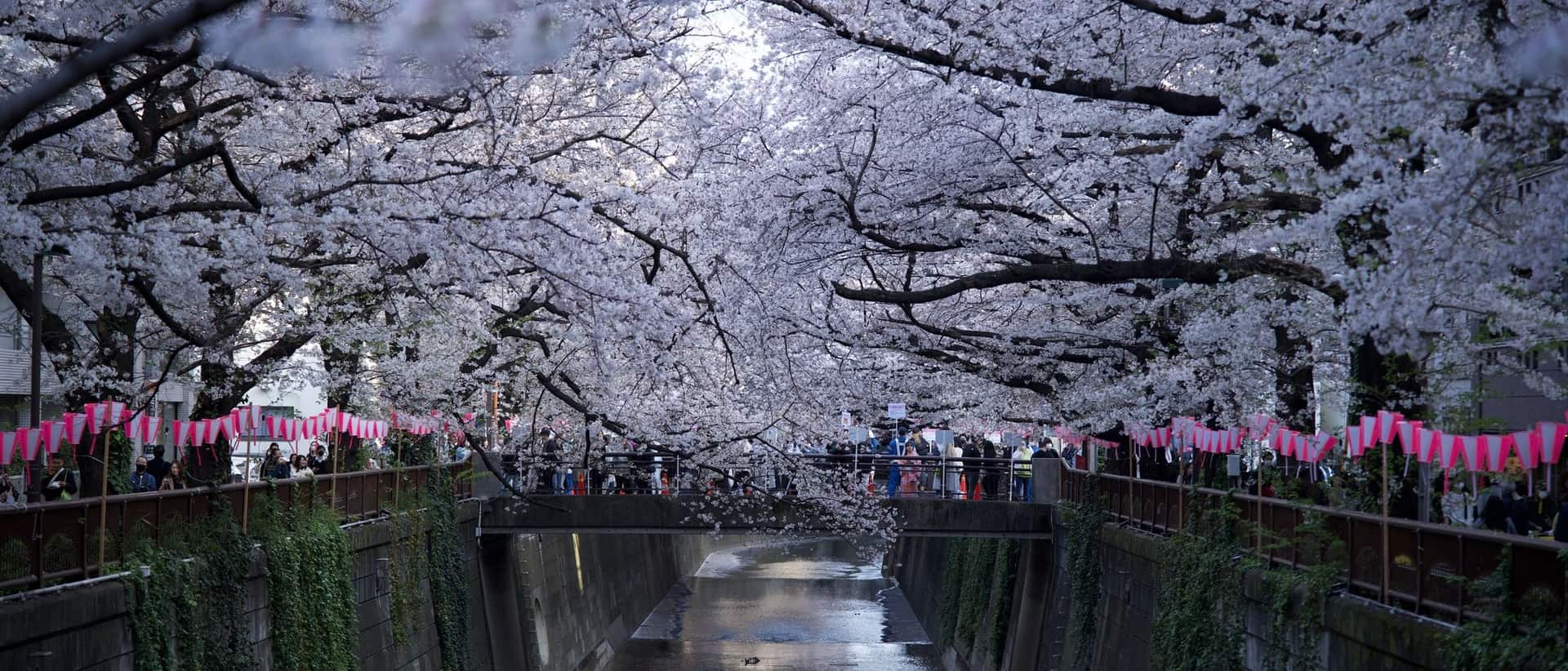
For roughly two weeks a year, Tokyo turns into a tunnel of pink and white. Sakura season is not a botanical event here — it is a national mood. Offices reorganise around it, the evening news forecasts it like weather, and the whole city goes outside at once. If you are deciding when to see Japan for the first time, this is the fortnight that decides people.
01Why Tokyo is the world's greatest city for cherry blossoms
Plenty of places have cherry trees. What Tokyo has is the relationship. When the blossoms erupt — across parks, canals, cemeteries, school gates, parking lots — nobody admires them from a distance. People gather under them, eat under them, drink under them. The Japanese idea of mono no aware, the bittersweet awareness that beautiful things do not last, is not something you read about here; it is something thirty million people practise together for a fortnight.
02When to come
Peak bloom in Tokyo usually lands in the window from late March into the first days of April. The honest answer about exact dates is that nobody has one until a few weeks out — the forecast is a national pastime for a reason. Three windows are worth knowing:
- Early season, mid-March — the deep-pink Kawazu-zakura varieties open first; Shinjuku Gyoen is the reliable place to find them.
- Peak bloom, late March to early April — the main event, the two weeks the whole country plans around.
- Late bloom, into mid-April — double-flowered varieties like Yaezakura and Ichiyo carry the season on after the famous trees have finished.
One scheduling rule beats all the forecasting: weekdays. The trees do not know it is Saturday, and the difference in crowds is enormous.
03Hanami: the thousand-year-old picnic
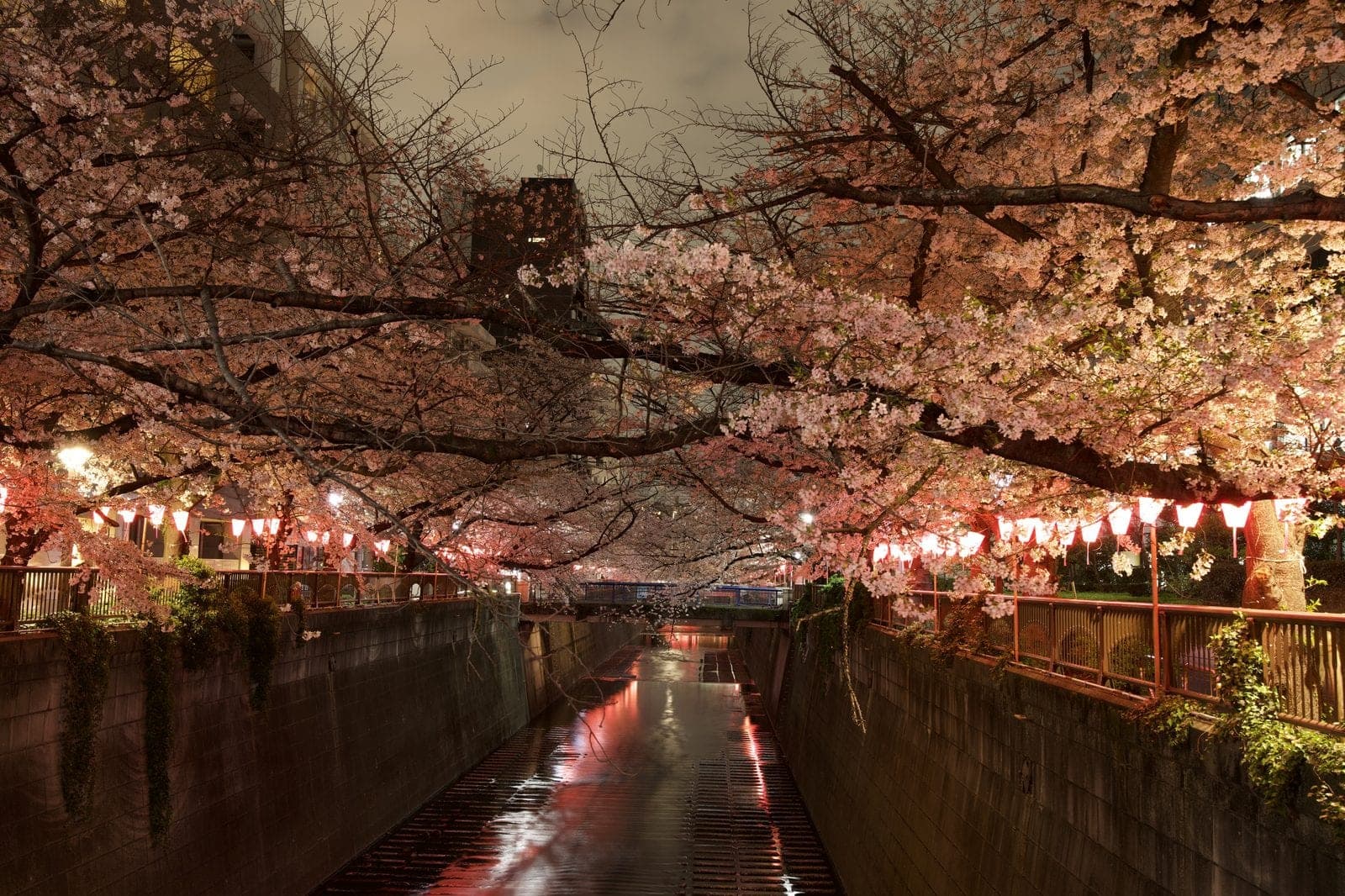
Hanami (花見) means flower viewing, and it is a full-scale picnic celebration with more than a thousand years behind it. It began as a court ritual — aristocrats composing poetry under plum blossoms — and during the Edo period the cherry replaced the plum and the party spread to everyone. That is what you are joining under the trees in Ueno Park or along the Meguro River: not a photo opportunity, a tradition.
Doing it right is mostly manners. Bring a mat. Bring your own food and drink — the convenience stores are full of seasonal things made for exactly this. Take every scrap of rubbish with you, because the parks remove their bins for the season. Keep the volume neighbourly, never break a branch or shake a tree for a photograph, and come early — on peak weekends the tarp-claiming starts before sunrise, and by early afternoon there is no ground left.
04Not all sakura are the same
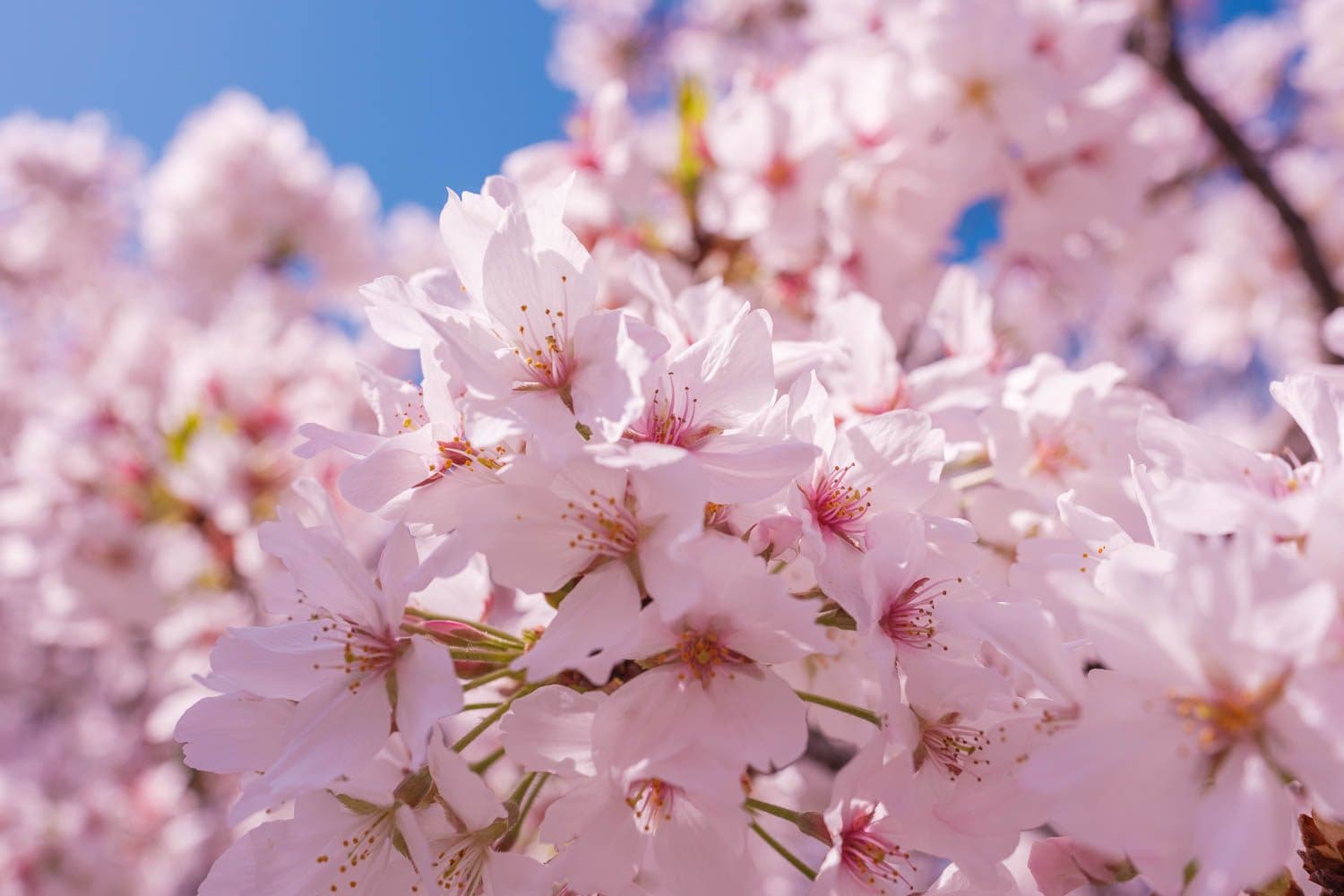
Japan maintains more than six hundred registered cherry varieties. You will meet a handful in Tokyo, and telling them apart is half the pleasure of a long season:
- Somei Yoshino
- The icon: five pale petals, blooming before the leaves come, roughly four of every five sakura trees in Japan.
- Kawazu-zakura
- Deep pink and weeks early; the reason mid-March visitors are not too soon.
- Yamazakura
- The mountain cherry, flowering alongside reddish young leaves; wilder-looking, at home in Tokyo's western hills.
- Ichiyo
- Up to twenty petals per flower, almost a peony; it stretches the season into mid-April.
- Ukon
- Rare, pale yellow-green, and startling when you find it; Shinjuku Gyoen's formal garden keeps notable specimens.
- Fugenzo
- Deep pink turning nearly magenta in full sun, one of the last to open.
05Where to stand
- Ueno Park
- Eight hundred trees, festival stalls, and the loudest, most electric version of hanami Tokyo does.
- Chidorigafuchi
- Rent a rowboat and drift under branches that lean out over the Imperial Palace moat.
- Shinjuku Gyoen
- Over a thousand trees, no alcohol allowed, and therefore genuinely peaceful; the best place to spot varieties.
- The Meguro River
- Eight hundred trees over a narrow canal; at night the lanterns turn it into a glowing pink tunnel.
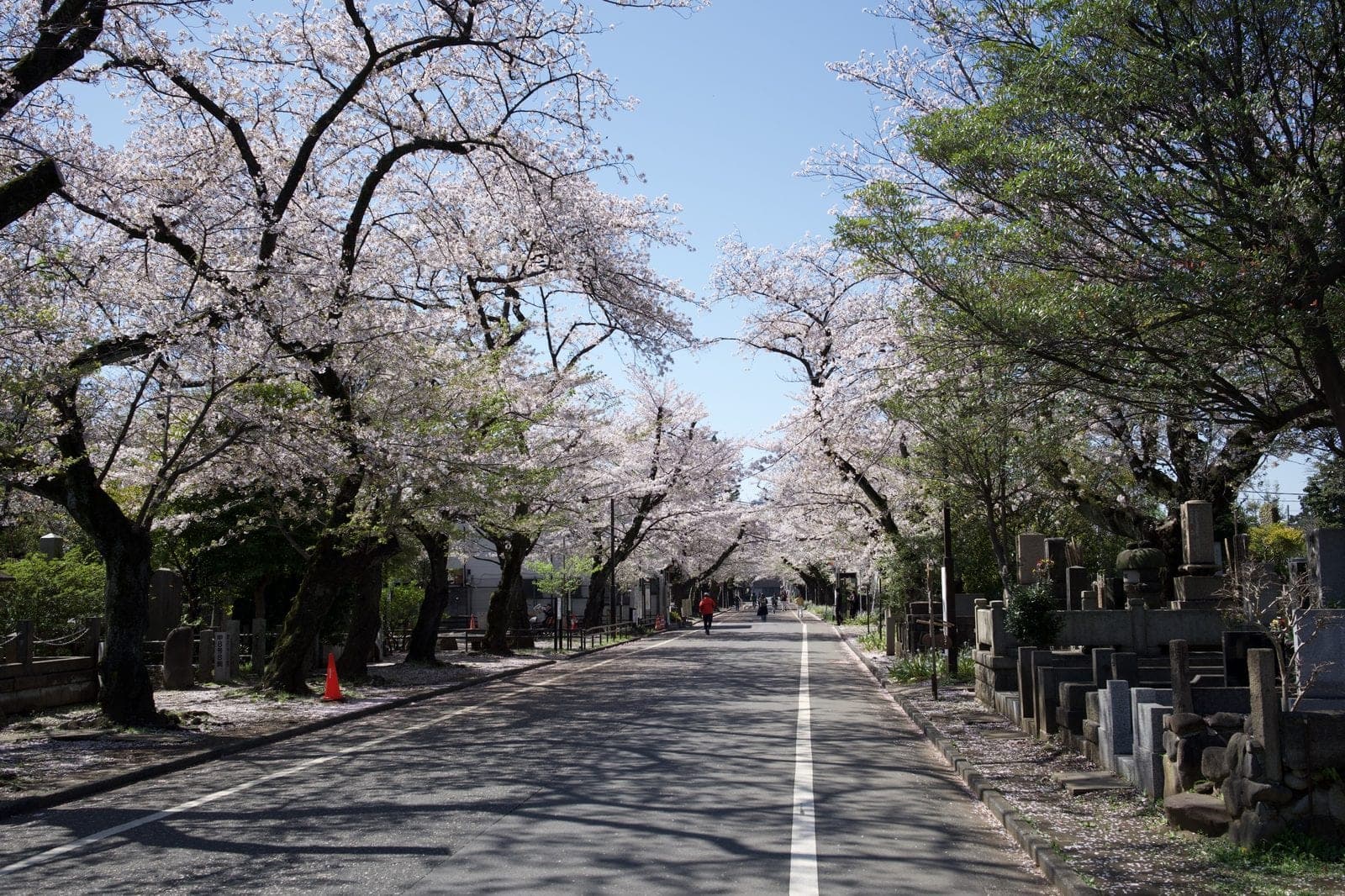
And the one the buses do not know: Yanaka Cemetery, in the old north of the city. Old trees, almost no tourists, and a neighbourhood around it that still moves at Edo pace. Go on a weekday morning.
06What to eat while the petals fall
The season has its own flavour — pale pink, subtly floral, gently sweet — and it appears everywhere from convenience stores to hundred-year-old shops.
- Sakura mochi
- A pink rice cake around sweet red bean paste, wrapped in a pickled cherry leaf; the salt of the leaf against the sweet filling is the point.
- Sakura-cha
- Pickled blossoms steeped in hot water; lightly floral, lightly salty, served at ceremonies and unlike any tea you know.
- Hanami dango
- Three dumplings on a skewer: pink for the blossom, white for the leaving winter, green for the new leaves. Best with matcha.
Hana yori dango — "dumplings over flowers."
The proverb comes from hanami itself: a thousand years of honest people admitting the picnic mattered more than the poetry.
07Beating the crowds
Millions of people share the same two-week window, so the clock is your best tool. Dawn, six to eight, is magical light and almost nobody. Morning is comfortable walking before the buses arrive. Midday to four is the crush — that is the time for museums and shrines. And after five the lanterns come on: yozakura, the night blossoms, at their best along the Meguro River and Chidorigafuchi.
- Layer up — early April mornings by the water are colder than the photographs suggest.
- A cheap sit-mat from a hundred-yen shop earns its keep every single day.
- Carry cash for festival stalls and the older shops.
- An IC card (Suica) from the airport runs the trains, buses and convenience stores.
- Do not fear rain: petals on wet stone, and hanafubuki — the blossom blizzard when wind takes a full tree — are the season's best moments.
Japan offers you many seasons. Sakura offers you something else — proof that the most beautiful things are the ones that do not last. Pack lightly, book early, and go.
Written by
Momo — every kind of day, run like it's her specialty. By now they all are.
Filed under: seasons · spring · hanami
The day this note comes from
Walk it with us.
Tokyo Private Walking Tour
Built around what you're curious about — temples, markets, the streets between them — with a local guide who reshapes the day as you go.
from¥36,000for 1–2 guests
- up to 10 guests
- 4, 6 or 8 hours